
Our Work
Empowering Inclusive Classrooms
At Pathways to Inclusive Education, we recognize the critical role teachers play in creating inclusive classrooms. That’s why we work directly with educators, providing professional learning to help them develop instructional practices and foster collaborative professional cultures.
We also understand the importance of engaging parents and the broader community in the educational process. Our team partners with school leaders to create strategies that involve parents and communities, ensuring that everyone is working toward the same goal: providing the best education for every child.
Ongoing Support for Lasting Impact
Creating inclusive learning environments is not a one-time effort; it’s an ongoing process. We are committed to offering continuous support to ensure schools make progress towards their long-term goals. Our partnership with schools is built to last, evolving over the course of multiple years to ensure lasting impact.
Three Levels of Support
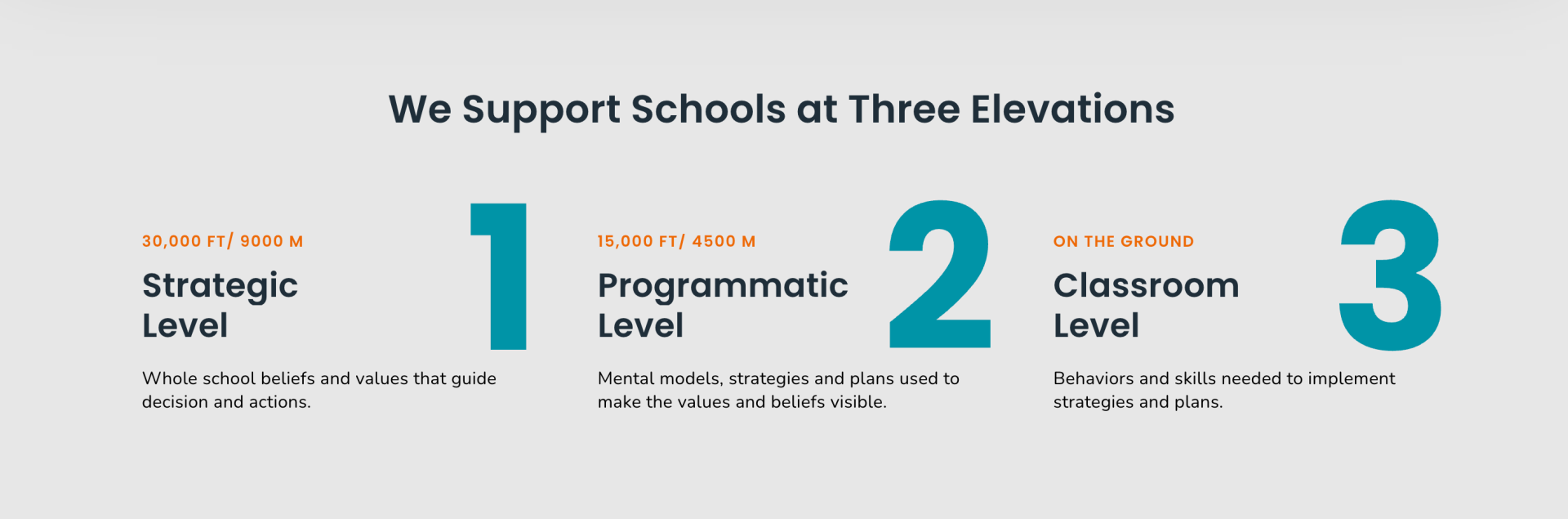
We work with schools at three distinct levels, ensuring that strategic priorities translate into classroom practice and ultimately improve student learning outcomes. Each level plays a vital role in creating meaningful, sustainable change.
1. Strategic Level (30,000 ft/9,000 m)
Our collaboration begins with a comprehensive program review to understand the school’s core beliefs and values. This review includes:
- Examining organizational statements such as the mission and core values.
- Engaging with community members, including teachers, students, administrators, and parents.
- Analyzing data and evidence related to student performance to identify resources or barriers within current programmatic structures and practices.
The program review culminates in a detailed report with commendations and recommendations at all three levels of school operations. Whether conducted onsite or virtually, we guide school leadership through these insights to drive school-wide change.
2. Programmatic Level (15,000 ft/4,500 m)
As schools evolve, their instructional systems must reflect their beliefs and values. We work with schools to enhance their existing models, including:
- Instructional models
- Multi-Tiered Systems of Support (MTSS)
- Student Support Services
- Universal Design for Learning (UDL)
- Response to Intervention (RTI)
- Positive Behavior Interventions and Supports (PBIS)
- English as an Additional Language (EAL) and Designated English Language Development (ELD)
- Learning support processes, including identification, progress monitoring, and student exiting procedures
- Co-teaching
- Standards-based learning
Our approach includes coaching conversations with grade-level leaders, team leaders, and teachers to promote professional learning and reflection.
3. Practice Level (On the Ground)
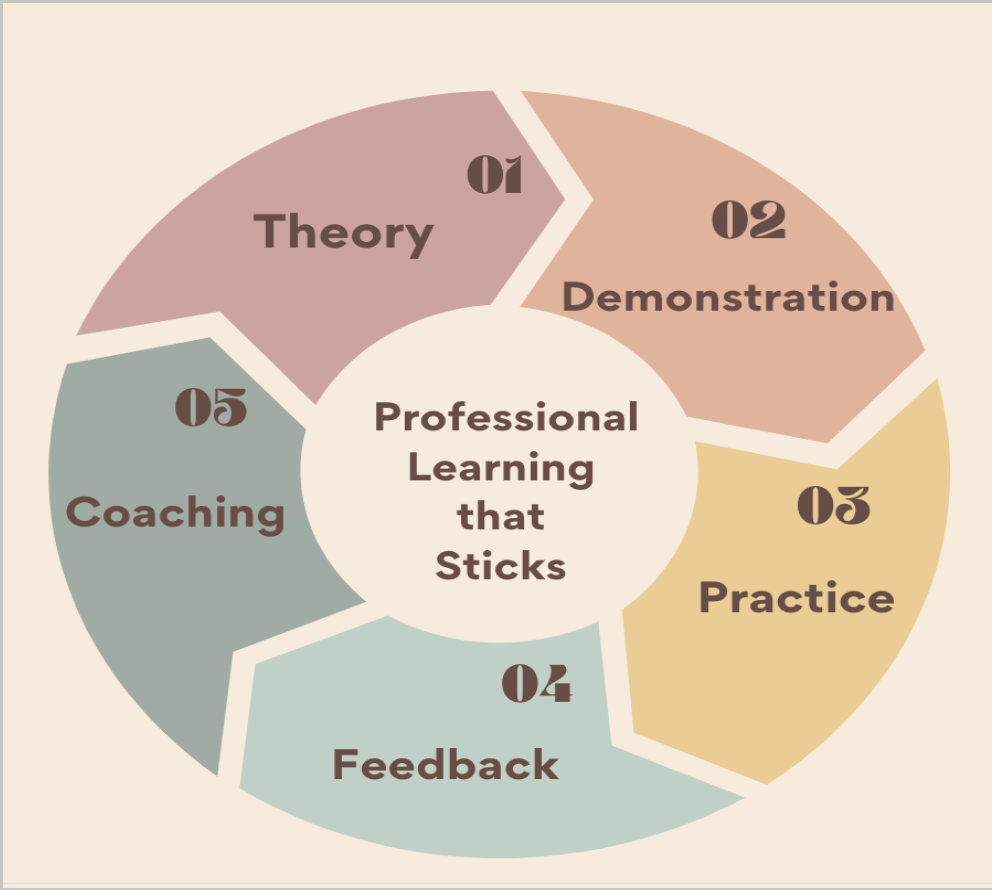
Changing instructional practices requires shifting beliefs. We help school communities embrace new practices through tailored professional learning that emphasizes relevance and process. Using Jolleen Killion and Cindy Harrison’s Professional Learning That Sticks, we guide faculties through theory, demonstration, practice, feedback, and coaching.
Our diverse team can:
- Collaborate with teachers to plan units and lessons aligned with U.S. content standards and the International Baccalaureate.
- Offer strategies for addressing student needs, including speech-language, behavior, Autism Spectrum Disorder (ASD), and more.
We focus on key areas like:
- UDL Lesson Design
- MTSS: Tier 1 instructional support, plus Tier 2 and Tier 3 interventions
- EAL and ELD: SIOP/Sheltered Instruction and WIDA standards
- The Collaborative Teaching Cycle: Co-planning, co-teaching, co-assessing, and co-reflecting
By modeling contemporary teaching practices during professional learning sessions, we equip teachers with tools they can implement immediately in their classrooms.
 Pathways to Inclusive Education